
Fairfax Previous Residents by Era
The backward trail starts with the time period, not an assumed household. Fairfax Circuit Court land records provide the longest property path, while address directories, maps, tax books, and historical collections supply dated context. Use the City’s own assessment and permit systems for City addresses. Fairfax County iCare and MAR serve the County and do not answer every City question. Each source shows a different association with an address, so record the source, jurisdiction, date, and limit alongside every name.
| Source | Years | Where held | What it shows |
|---|---|---|---|
| Circuit Court land records | 1742–present | Research Room, HRC, or CPAN | Recorded transfers, legal descriptions, and prior references |
| Historic Records Center original land records | 1742–1942 | Fairfax Circuit Court complex | Historic deed and related record series |
| Pre-1945 deed books | Before 1945 | HRC, Suite 317 | Earlier deed-book route |
| Hill’s City Directory leads | 1963, 1967, 1971 | Virginia Room or library service | Dated directory title and street lead |
| Haines Criss-Cross leads | 1977, 1982, 1987 | Virginia Room or library service | Address-oriented dated lead |
| Hopkins atlas and Sanborn material | 1879; about 1885–1960s | Library and archival holdings | Owner labels, streets, structures, and map context |
Property records can identify an owner, trustee, estate, or mailing entity. They do not by themselves prove who occupied a house. A directory or map likewise supplies a date-specific lead, not uninterrupted presence. The combination of a legal description, recorded instrument, directory entry, and dated map is more reliable than any one item alone.
Fairfax Previous Residents Address Forms
Before searching names, preserve the street number, street name, and suffix exactly as the earliest paper gives them. Fairfax County MAR can distinguish current and historical address sites and exposes status, created date, expired date, parcel relation, city, ZIP, subdivision, and street type. MAR is a County address-site resource, not assessment data, and it does not include Fairfax City addresses. The City’s separate WebPro and Accela systems are the appropriate initial routes for a City parcel or permit question.
A historic address can be renumbered, newly created, retired, or filed under a nearby community. Compare the original spelling with former names, adjacent streets, landmarks, the legal description, and map labels. Keep variants in a separate search note. That preserves the original record and prevents a convenient spelling change from being presented as a fact.
Note: An address association establishes a dated research lead, not continuous occupancy or a relationship among people who appear there.
Fairfax Previous Residents Deed Chain
Recorded instruments provide the legal backbone of a house-history search. The Fairfax Circuit Court Land Records Research page says public land documents run from 1742 to the present. Self-research is available in the Research Room on weekdays from 8:00 a.m. to 4:30 p.m. at 4110 Chain Bridge Road. CPAN offers subscriber access to land and related records from 1742 forward, while older books have an in-person Historic Records Center route.
- Obtain the current parcel or map number and the legal description from the correct City or County property source.
- Locate the latest recorded instrument using its book and page or instrument number when available.
- Copy the indexed grantor, grantee, recording date, consideration, and prior-instrument reference exactly.
- Search the prior purchaser or cited reference, moving backward one recorded transfer at a time.
- For older material, use the HRC finding aid or pre-1945 deed books and preserve every gap or unreadable page.
- Grantor
- The party transferring an interest in a recorded instrument.
- Grantee
- The party receiving the stated interest in that instrument.
- Chain of title
- A sequence of recorded transfers traced through prior references, not a conclusion from an assessment card.
- Legal description
- The parcel description in the instrument, often more stable than a street address over time.
Save an instrument number or book/page, deed date, recordation date, parties, consideration, parcel description, restrictions, easements, and prior reference. The recorded deed controls the legal description. An assessment owner label or a GIS outline is a lead that needs to be checked against the instrument.
Fairfax Previous Residents HRC Route
The Historic Records Center deed finding aid is a useful starting point for older records. HRC describes holdings around land, probate, court-order, and chancery material from 1742 into the 1940s. Pre-1870 records are indexed, but early series have documented gaps. Read the relevant finding aid before a visit and prepare name variants, book series, date range, and record type.
The HRC deed holdings page explains the archived deed route and entry context for Fairfax research.
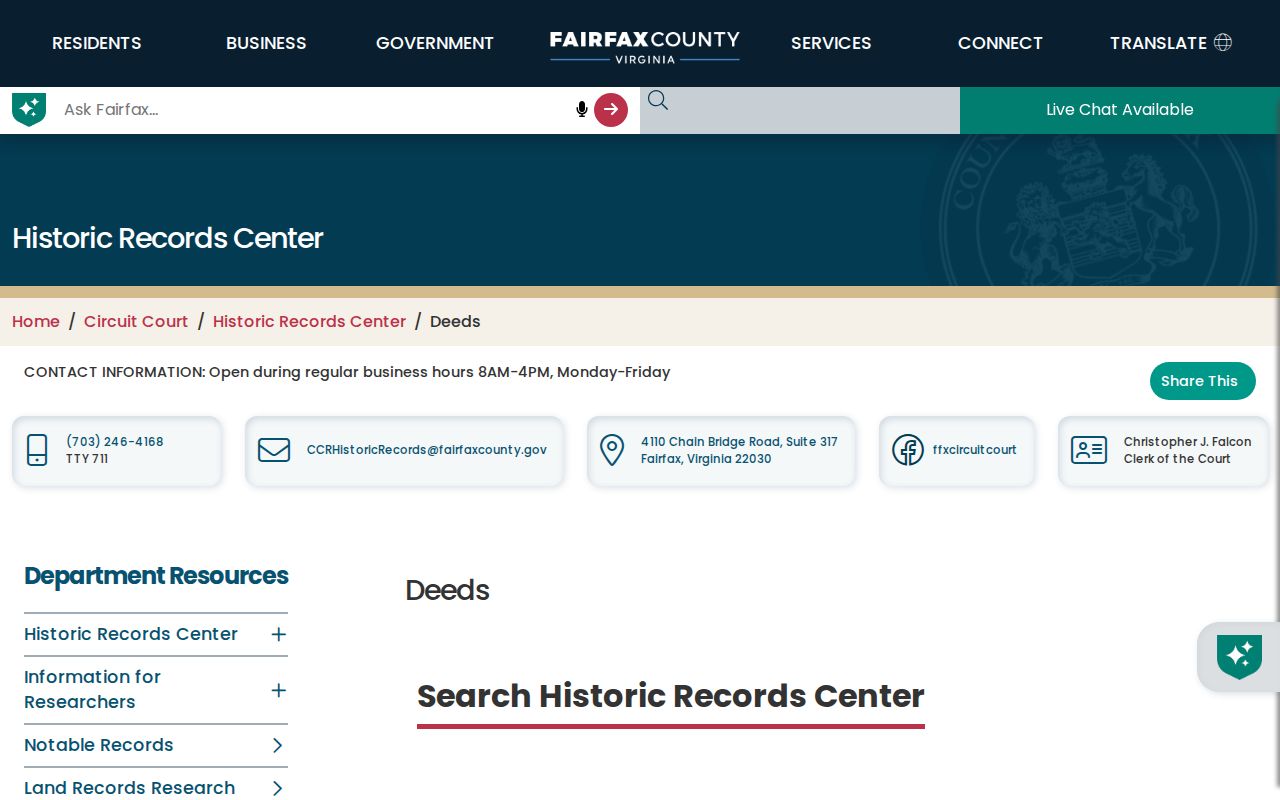
The finding aid helps turn a name or old book reference into a focused request, particularly when an online result does not reach the needed period.
For a copy, Fairfax reports a captured fee of $2 per document plus $0.50 per page for a certified land-record copy. Mail requests need an instrument or book-page detail, payment, and a self-addressed stamped envelope; the captured mailing estimate is about two weeks. Recheck the live copy instructions before sending payment because forms and fees can change.
Fairfax Previous Residents Record Access
The Research Room, Historic Records Center, and CPAN are separate access channels for the same broad land-record environment. CPAN requires an entity agreement, user agreement, and a captured $150-per-user check or money order for a new account, followed by a captured quarterly $150-per-user charge. Account sharing is prohibited. Its covered categories include land, judgments, fiduciary and probate, marriage licenses, notary, business, financing, trade-name, civil and criminal, zoning, and assessment material.
The Circuit Court land-record research page lists the public research route, including the in-person option that remains useful before a remote subscription is warranted.
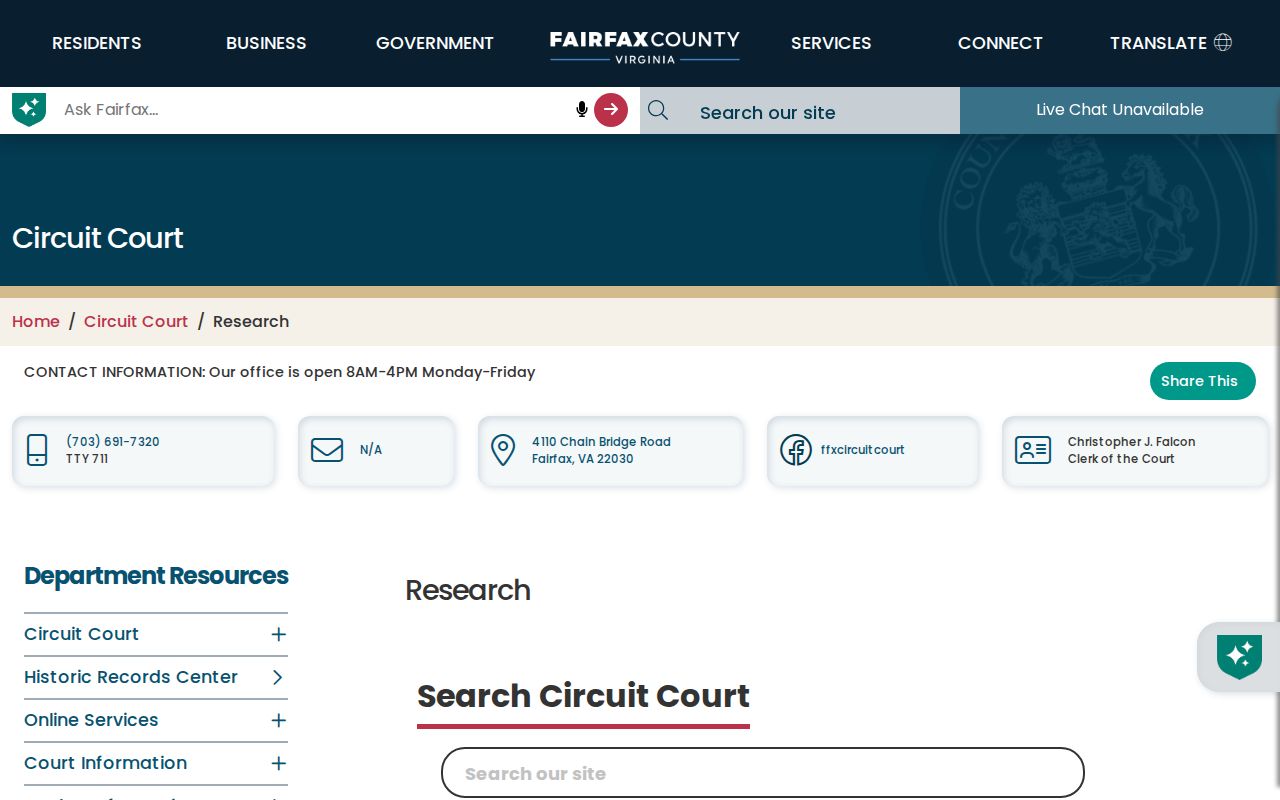
A subscription index and an original wet-ink instrument serve different purposes. For the legal description and an auditable citation, retain the clerk copy or original record reference.
Fairfax Previous Residents Map Clues
Historic-property guidance offers a practical cross-check after the deed sequence. Capture the parcel or PARID, locate the legal description and prior instrument, then compare the 1879 Hopkins atlas, Sanborn maps, and historic map books. Add the county inventory, Virginia Historical Inventory, Virginia Room photographs, and newspapers as the research question requires. Sanborn coverage generally begins around 1885 and continues into the 1960s, with holdings at the Library of Congress, Library of Virginia, and UVA.
Fairfax historic-property research guidance sets out this map, deed, and local-history sequence.
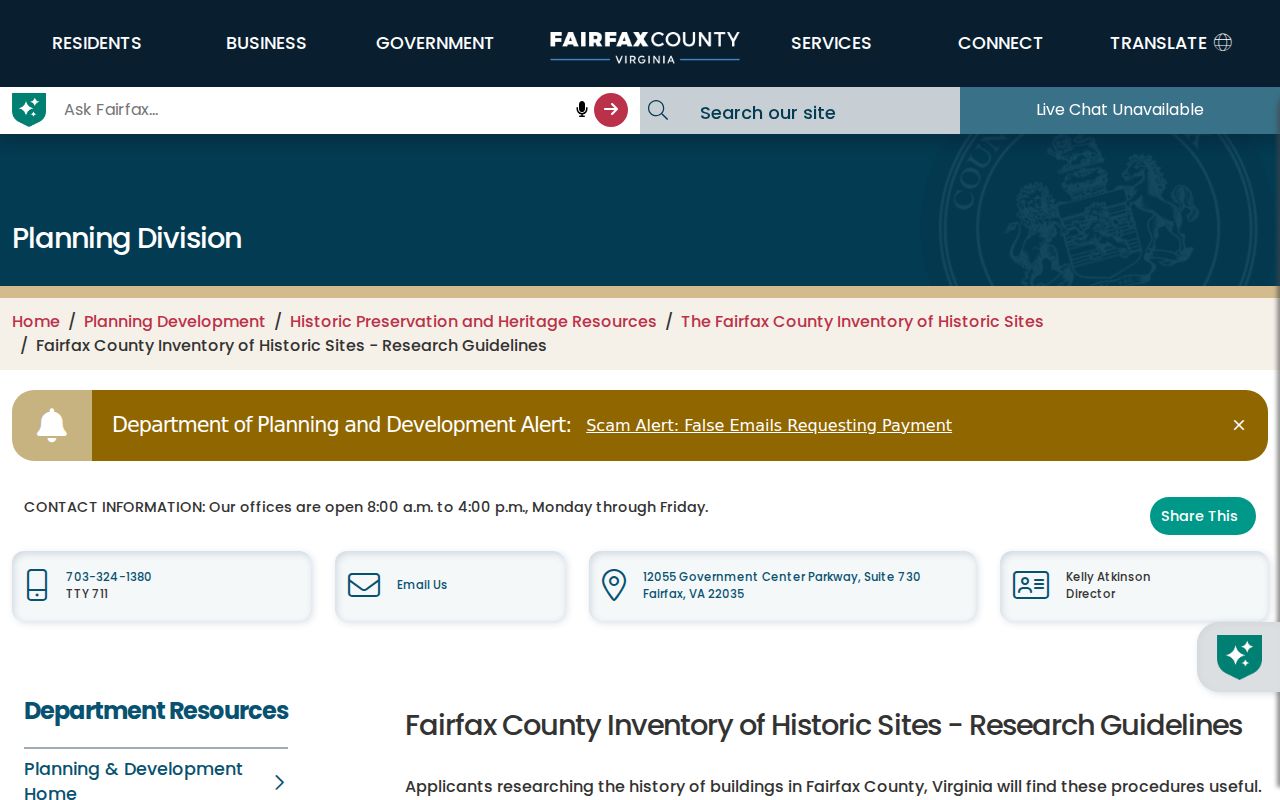
Map labels can generate a deed, tax-book, probate, or newspaper search. They do not prove an occupant or establish that the present building stood on the mapped date.
Fairfax Circuit Court reported a June 2025 preservation grant for the 1879 atlas and Land Tax Books from 1892, 1900, and 1910. Those materials can connect a parcel, name, and period, but a deed is still required to verify a transfer.
Fairfax Previous Residents in Directories
Deeds follow transfers. They do not necessarily name the people who lived at the address. The Haines Criss-Cross leads for 1977, 1982, and 1987 start from a street and number, while Hill’s directory leads for 1963, 1967, and 1971 provide another dated route. The official attachment that identified those years records the target street, year, source title, page when present, and listed or not-listed status. It does not establish a complete directory run.
Pair each address lead with the nearest available dated source. A Virginia Room directory, newspaper, map, yearbook, cemetery file, probate record, or released census schedule may test whether the same person or household appears in the same period. Keep the collections question separate from the address question: the Fairfax city directory page details the historical shelf and how to record an entry.
Use a disappearance cautiously. A person may have moved, died, been omitted, changed spelling, or appeared under a different community heading. A record of “not listed” is useful only when the exact volume, year, and search form are preserved.
Lawful use. Fairfax house-history research is for family history, estate and heir work, property history, and personal curiosity. Do not use dated records to stalk, harass, or harm a living person.
Fairfax Previous Residents Endpoints
Probate and vital records can sometimes explain the end of an address trail, but each has access rules. HRC original Will Books cover 1742 through 1935, and probate indexes after 1935 are available through CPAN or at the courthouse. A petition or inventory can identify a fiduciary, heir, asset, or property reference. It does not prove that every person sharing a surname was part of the same family.
For vital events, Virginia Department of Health records have separate custody and opening periods. Surviving birth and death records exist for 1853 through 1896, followed by no general registration from 1896 to June 14, 1912. Marriage certificates at HRC cover 1855 through 1954, while later or restricted material has a VDH route. Preserve the event type, date, custodian, and eligibility limit rather than guessing from an index.
Fairfax Previous Residents Gaps
A missing page is evidence about the records, not a conclusion about a household. The clerk’s building burned in 1875, and other historic records were destroyed or carried away during the Civil War era. Gaps can also arise from incomplete registration, record transfers, a street being filed under a different community, or a City and County boundary mistake. Write down the custodian, date range, expected source, and exact failed search before trying the next channel.
Fairfax City became independent in 1961. The City maintains separate clerk, cemetery, assessment, and permit systems. Fairfax County land records and historical collections remain important around the City, but an address must be placed in the correct jurisdiction before its result becomes part of a trail. That check is especially important where one postal name crosses more than one custodian.