
Fairfax Resident Lookup Record Trail
One Fairfax resident lookup can involve several custodians. A property card can associate an owner or entity with a parcel. A court index can identify a party and case number. None alone proves present occupancy. Fairfax is also a jurisdiction check: the independent City uses WebPro, while County iCare and MAR serve County records.
| Record | What It Confirms | Where | Access |
|---|---|---|---|
| Assessment card | Named owner or entity, parcel, sale, and physical-property lead | County iCare or City WebPro | Free online; owner display may be withheld; not occupancy or title proof |
| Land or probate record | Transfer parties, fiduciary or heir relationship, and document reference | Fairfax Circuit Court, HRC, or CPAN | Research Room and HRC access; CPAN subscription; some copies have fees |
| Court index | Party name, case type, and case-number lead | eCaseSearch or Virginia General District Court | Free index routes; documents and sealed matters are not in eCaseSearch |
| Vital index or certificate | Event, relationship, date, and place when access rules allow | VDH, Fairfax Circuit Court, HRC, or Library of Virginia | Opening periods and eligibility apply; current VDH search or certificate is $15 |
| Credential or entity filing | Public professional or business role and record status | Virginia DPOR or SCC/CIS | Free search landing; a business address is not a residence |
Start with the source keyed to what is known. A street address may lead to a parcel. A full name with a date range may fit a court or archival index. A known marriage or death event belongs with the vital custodian. The right result records the role exactly as shown: owner, party, fiduciary, credential holder, or historical directory subject. That distinction keeps a named record from becoming an unsupported claim about a Fairfax resident.
Matching a Fairfax Resident by Name
Same-name errors are common in Fairfax because a result may refer to Fairfax City, Fairfax County, another Virginia locality, an estate, a trustee, or a business. Use two independent signals before joining records. Strong pairs include an exact full name and a matching address or year, or a name and a parcel number that also appears in a recorded instrument. Preserve a middle initial, former spelling, suffix, case number, book and page, or record date when it appears. Do not silently normalize an old street spelling.
Preserve the printed name, record class, jurisdiction, date, location or parcel, source, access limit, and match confidence. Mark blank information as not publicly displayed. A portal miss can reflect the wrong jurisdiction, a restricted series, a limited date range, a different spelling, or an index without source images.
Note: Keep owners, court parties, license holders, and occupants in separate fields unless an official record directly connects the roles.
Fairfax Court Lookup Fields
Fairfax eCaseSearch is a free Circuit Court index beginning October 18, 2004. Its controls use a Civil or Criminal case type and Party Name or Case Number. The page asks for a case number, a last or company name with at least two letters, and an optional first name. Results are capped at 100. Documents and sealed cases are absent, so a hit is a retrieval handle, not a final record.
| Visible field | How it helps identify a result |
|---|---|
| Case Type | Separates the Civil and Criminal search paths. |
| Search By | Uses Party Name or Case Number as the search route. |
| Case Number | Uses formats such as CL-2024-0000000 or FE-2024-000 and opens details when linked. |
| Last or Company Name | Requires at least the first two letters, so test name variants carefully. |
| First Name | Optional narrowing field for a common surname. |
Virginia’s court case-status service is the separate General District Court route. Select Fairfax City or Fairfax County, then the division, case type, and active or inactive status. For an index that needs a file, use the courthouse public terminals, Civil Records Division, Criminal Division, or the file-review request route. The Circuit Court does not participate in the statewide circuit search.
The eCaseSearch form shows the Civil or Criminal and Party Name or Case Number choices used in a Fairfax resident lookup.
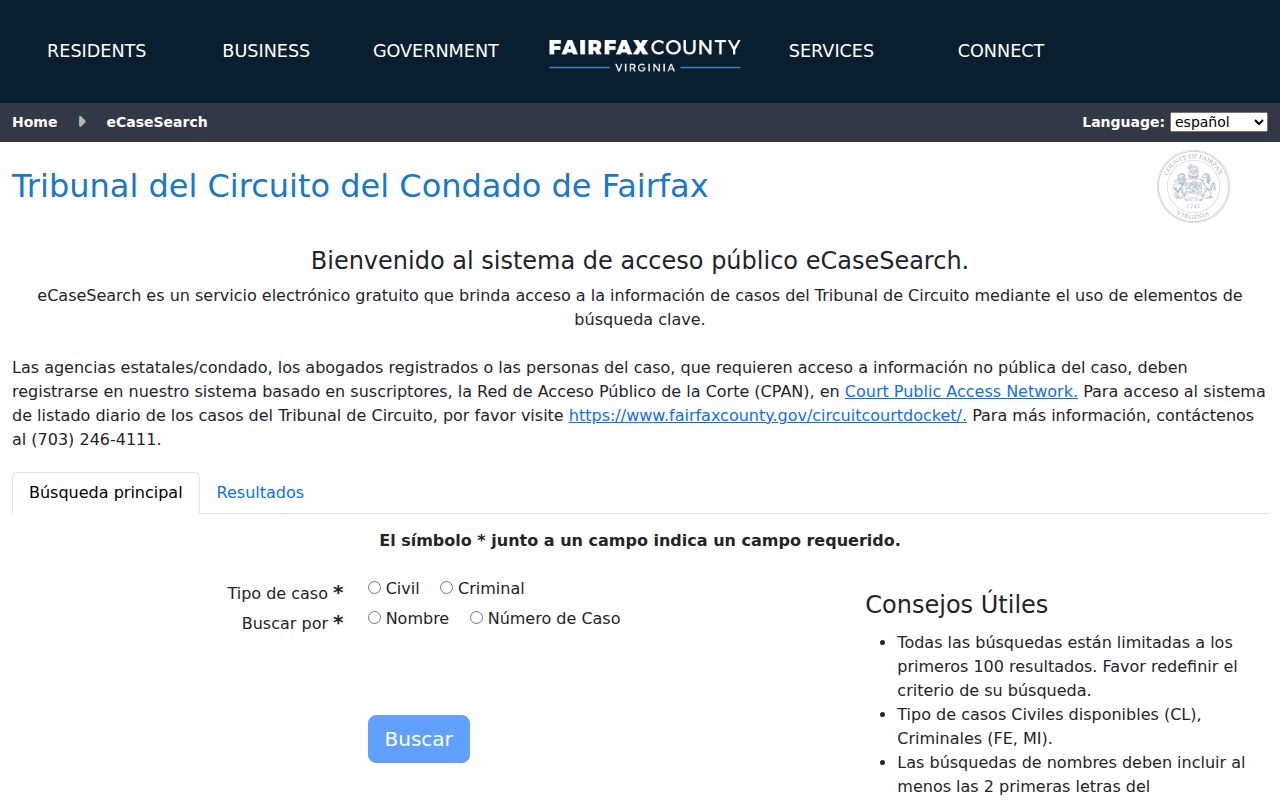
The form supports a narrow party-name search, but it cannot establish current residence or reveal a sealed file.
Verifying Fairfax Resident Records
Verification starts with one record-specific connection and ends at the custodian. For County property, iCare can supply a current assessment lead. A City address belongs first in City WebPro. From either parcel, record the situs address and parcel identifier, then compare a land record, a case index, or a dated historical source. A recorded deed is stronger for legal title than an assessment card, and a vital index is not a certified copy.
- Write the full name, exact address, City or County jurisdiction, and date range. Keep any middle initial, unit, or street suffix.
- Use the assessment or parcel record as a lead, then compare the address and parcel number with the latest recorded instrument or a dated directory entry.
- Search the court party index with the printed surname and a careful variant. Record the case number and court division rather than guessing what a case means.
- Request a custodian copy only when needed. Circuit Court land-copy requests use an instrument number or deed book and page; vital access follows VDH eligibility rules.
- Docket
- A court’s running index of a case. It is a route to the file, not a statement that every detail is public.
- Index and image
- An index lists a record’s identifying details. An image reproduces the source document and may require a terminal, subscription, or request.
- Certified copy
- A custodian-issued copy with official certification. It is different from a portal result or a research note.
Court Public Access Network, or CPAN, is Fairfax Circuit Court’s subscriber route for land, probate, marriage, notary, business, assessment, and older circuit material. It requires agreements, a $150 per-user setup payment, and a captured quarterly $150 per-user charge. The Research Room, Historic Records Center, and Virginia Room CPAN station are documented non-subscription alternatives for relevant series.
CPAN access information identifies the subscriber service behind many older Fairfax record classes.
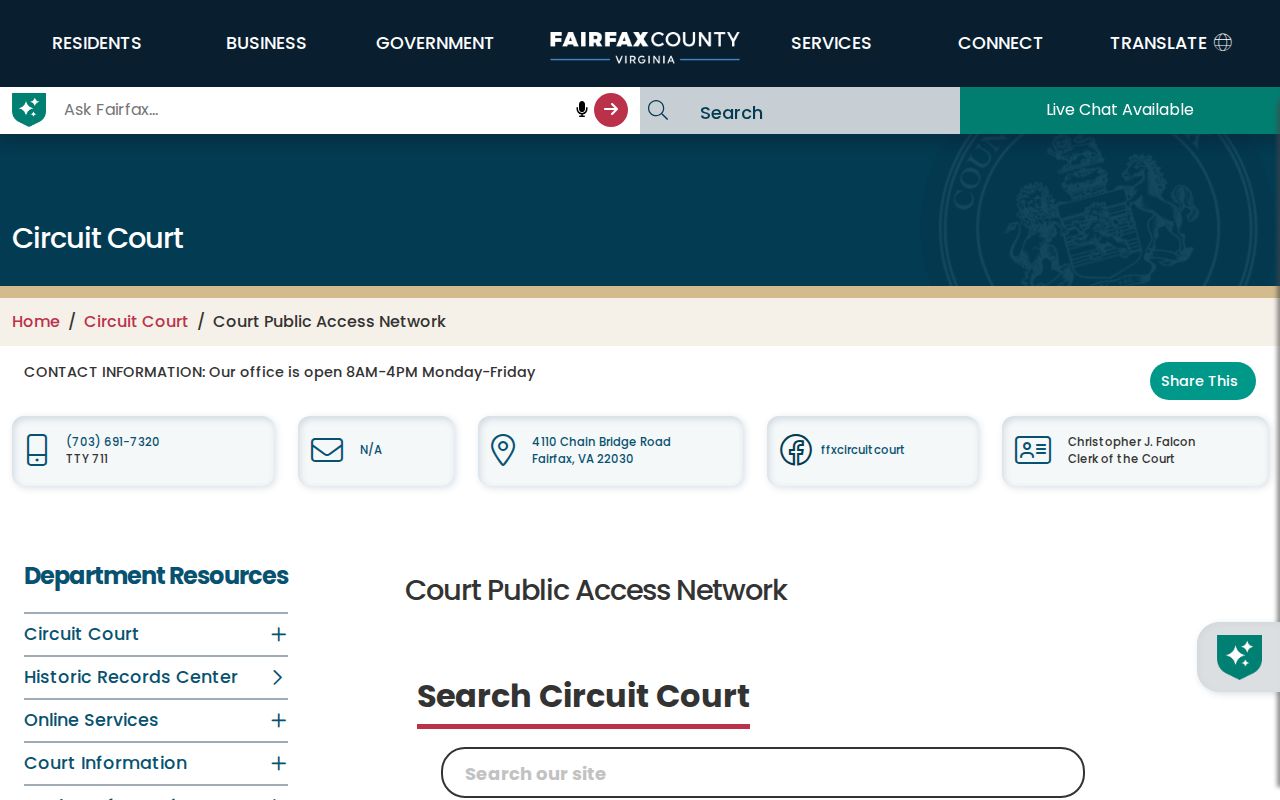
For pre-1945 deed books, the Historic Records Center holds the original volumes, so an online index is not the only route.
Fairfax Resident Vital and Probate Paths
Virginia Department of Health Vital Records is the main channel for birth, death, marriage, and divorce records. Birth records become public after 100 years. Death, marriage, divorce, and annulment records generally open after 25 years. Before those periods, eligibility and identification rules apply. VDH reported a $15 certificate or search fee effective July 1, 2026. Use the current application instructions because processing statements differed across captured pages.
For a Fairfax event, documented channels include VDH online or paper applications, mail, a VDH walk-in location, and local health departments that issue Virginia certificates. The Fairfax Circuit Court issues copies of marriage licenses it issued. Surviving 1853 to 1896 birth and death records and pre-1936 marriage microfilm are held by the Library of Virginia; interlibrary loan may lend up to five reels for 28 days. There was no general birth or death registration law from 1896 through June 14, 1912, so a missing result in that interval needs an archival trail, not a sweeping conclusion.
Probate offers a different kind of connection. Fairfax HRC has original Will Books from 1742 through 1935, while later probate indexes are on CPAN or at the courthouse. An estate record can name a fiduciary, heir, address, or asset, but sealed portions remain restricted. Preserve the will or estate book, page, date, and the relationship words actually used in the document.
Note: A public-age vital index can identify an event, but only the eligible custodian process supplies a certified record.
Fairfax Resident Voter and License Checks
Virginia’s Citizen Portal is a personal authenticated lookup, not a public name-and-address browser. It asks for the voter’s name, date of birth, last four Social Security digits, locality, and certification. When the inputs match, the result can show registration status, polling place, precinct and districts, absentee or early-voting information, and voting history. Never place those authentication fields in a public research note.
A purpose-limited public voter-list request is distinct from the portal. Virginia law permits defined fields such as name, residence address, year of birth, gender, and district assignments while omitting Social Security numbers, day and month of birth, protected substitutes, and registration-agency details. The Fairfax Office of Elections is the request and inspection channel. Voting history records participation, not a person’s choices, continuous residence, or identity by itself.
The Virginia Citizen Portal displays the protected personal lookup route that should remain limited to the voter.
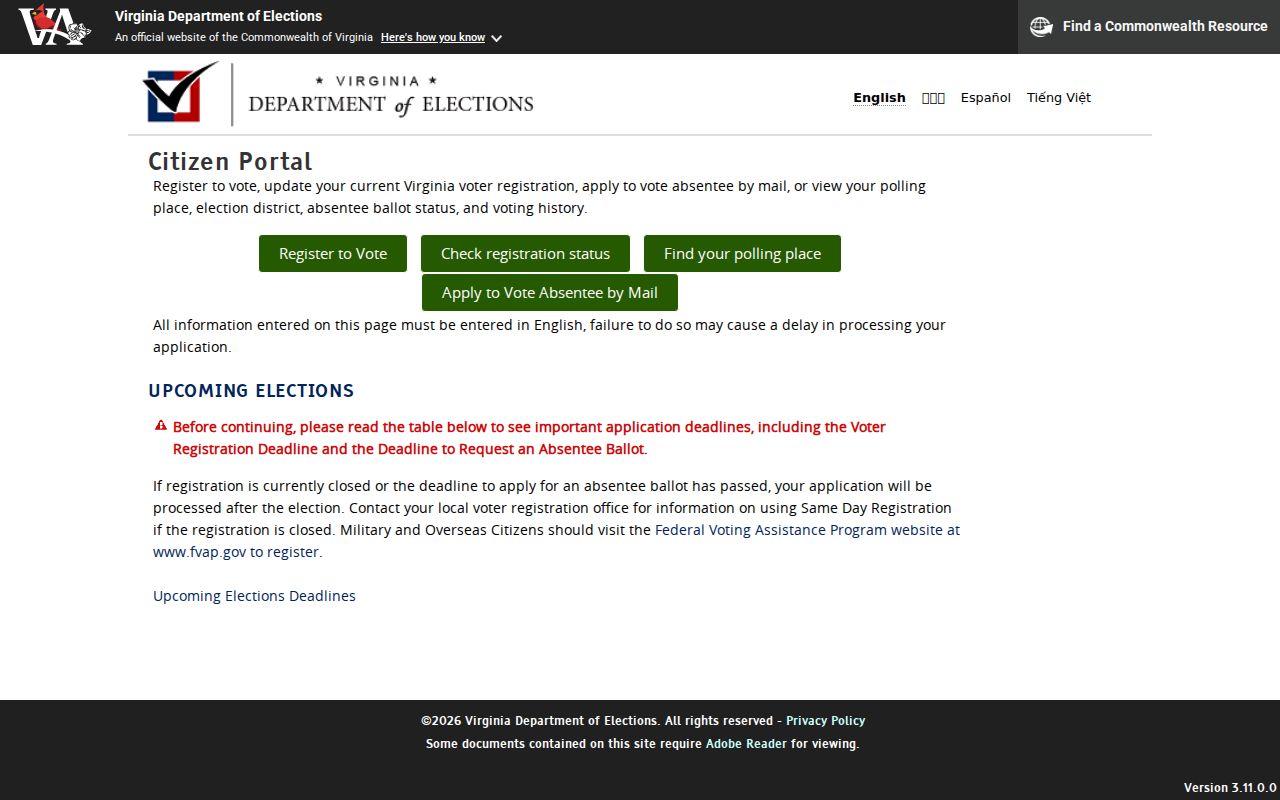
For public roles, use the exact credential or entity record instead of turning a business address into a residence claim.
DPOR License Lookup accepts name, license number, address, and license type, with an Advanced Search option. It can show credential number, type, holder, locality or address, status, dates, and public disciplinary links when available. Virginia SCC company search and CIS provide the separate entity and filing trail. DPOR says its online data is not itself the public record, and a registered office or agent is not proof of a Fairfax resident’s home.
Fairfax Resident Safety Record Context
Sensitive status searches require more care than ordinary name matching. Fairfax Adult Detention Center provides an information line, but the captured County page did not have a public name-search roster. For state custody, Virginia DOC NAAVI accepts a name, county, or DOC ID and supports a wildcard. Record the spelling, status, source, and search date. County of conviction is not necessarily the county of incarceration or residence.
NAAVI is the state-supervised custody search entry used for a carefully limited Fairfax resident lookup.
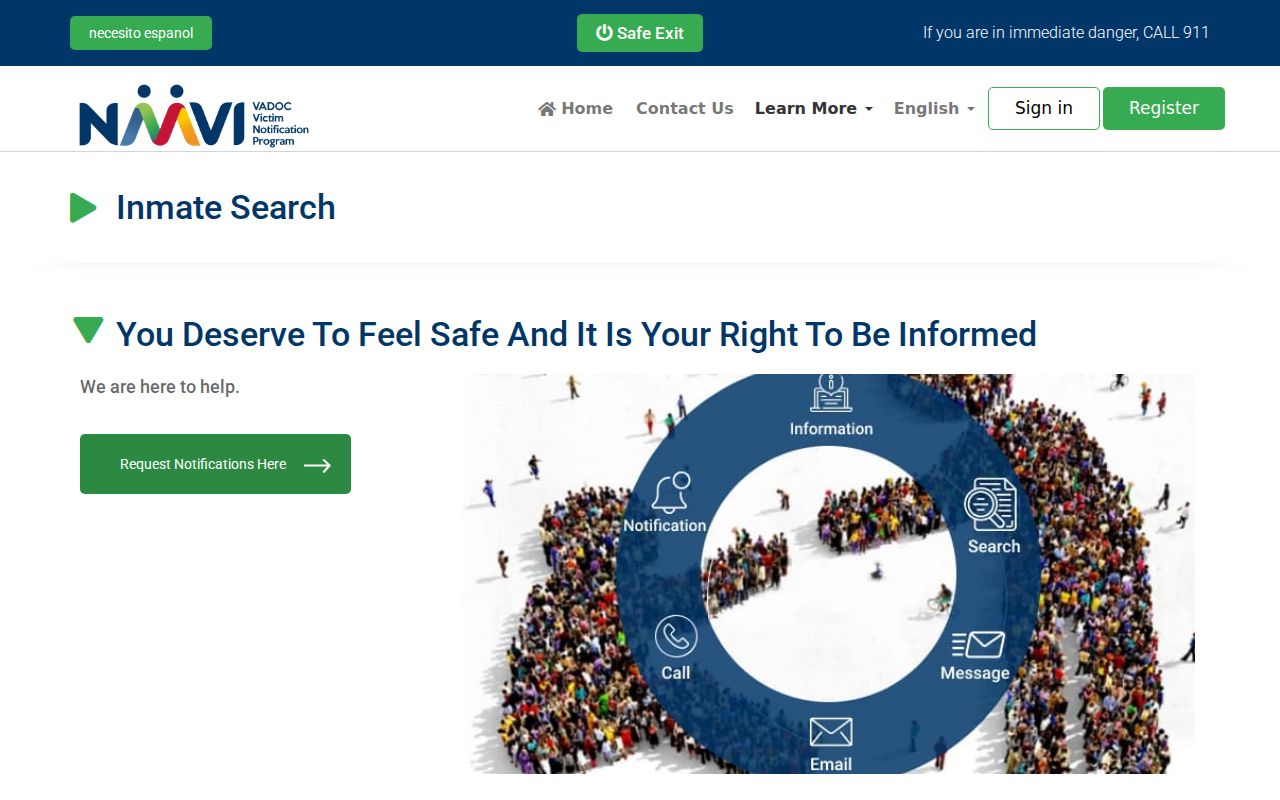
The search is a status lead, not proof of identity, current address, or a complete history.
Virginia State Police’s registry supports name, address, ZIP, city, county, registry number, radius, and map searches. Its warning says the information is for public-safety awareness and may not be a complete safety assessment. A match needs exact official fields and a retrieval date. It is never a reason to contact, follow, or expose a person.
The Virginia State Police registry entry shows its official search and legal-use notice.
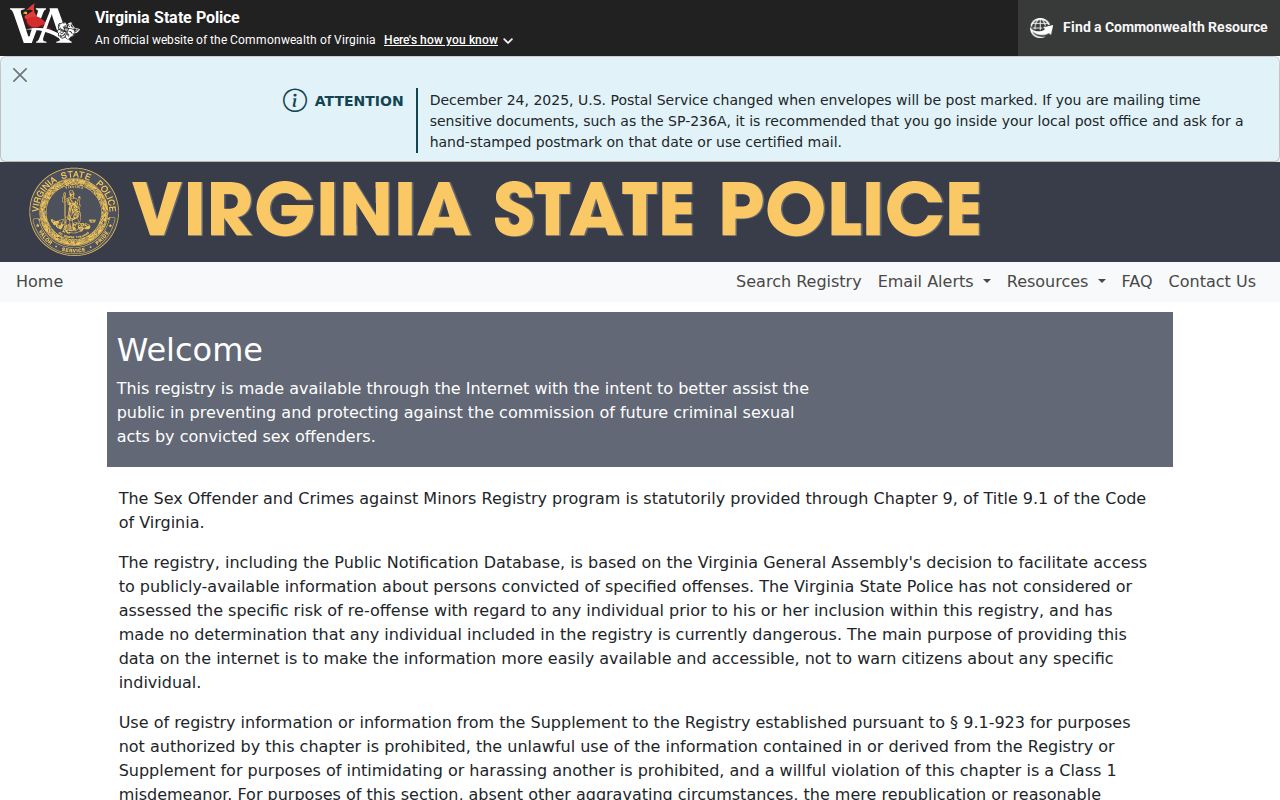
Use an official status only with the jurisdiction, date, and source, without implying guilt from an index or search result.
Fairfax Resident Lookup Privacy Limits
Virginia law keeps major parts of a person’s record private. Do not publish Social Security numbers, full birth dates that are not needed, account numbers, medical information, minor information, victim or witness details, or protected addresses. The Virginia Address Confidentiality Program provides an eligible survivor with a substitute mailing address and mail forwarding while the physical location remains confidential. Public records must never be used to reverse-engineer that location.
Fairfax County’s FOIA route is a fallback for County administrative records held by the proper custodian. A reasonably specific request normally receives a response within five working days, a permitted extension, a no-record notice, or an exemption explanation under VFOIA. Costs may apply, and a deposit can be required for estimated charges above $200.
The Virginia Address Confidentiality Program describes the substitute-address protection and eligibility pathway. A correction request should identify the source record, disputed field, retrieval date, and requested change for the originating custodian.
Lawful use. Use Fairfax resident records for personal research, family history, property questions, civic context, and scam verification. Do not use a resident lookup to stalk, harass, intimidate, or harm anyone.